Randomly Font for Business Branding and Design
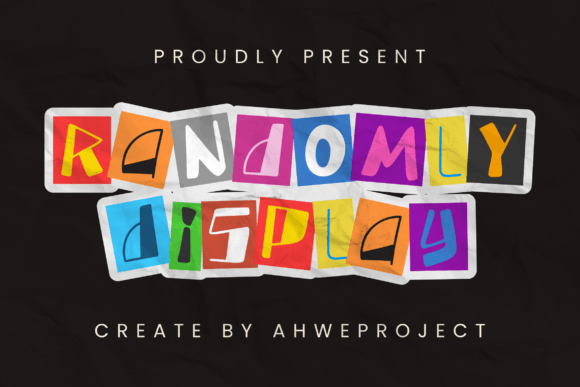
As a small business owner, I’ve learned that every detail matters when it comes to building a strong brand identity. From your logo to your packaging, the visual elements you choose shape how customers perceive your business. That’s why I’m excited about Randomly, a display font that brings a fresh, dynamic energy to any design project. With its unique character and bold personality, Randomly can help your brand stand out in a crowd.
Randomly is more than just a font—it’s a creative tool that adds flair and individuality to your branding materials. Each letter is designed with an eye for visual impact, making it perfect for headlines, logos, and other prominent text elements. Its unconventional sizing and structure make it feel alive, which is exactly what your brand needs to catch attention and leave a lasting impression.
How Randomly Can Elevate Your Brand Materials
I’ve used Randomly on various projects, from my café menu to my boutique website banners, and it always adds a touch of creativity without sacrificing professionalism. Here are some real-world examples of how this font can be used:
- Logo Design: A handmade candle label or a coaching business logo can benefit from the playful yet professional look of Randomly. It helps create a memorable first impression.
- Packaging Design: For a beauty product line or a boutique shop, using Randomly on product labels and packaging gives a sense of uniqueness and quality.
- Social Media Graphics: Whether it's an Instagram post or a Pinterest graphic, Randomly works well as a headline or accent text, adding visual interest to your content.
- Website Banners: Website banners and call-to-action buttons can be made more engaging by using Randomly for key phrases or promotional messages.
- Printed Materials: Business cards, thank-you cards, and flyers can all be elevated with the right font choice, and Randomly delivers a distinctive look that stands out.
Choosing the Right Font for Your Brand Identity
When selecting a font like Randomly, it’s important to consider how it aligns with your brand’s personality and target audience. This font has a whimsical and artistic vibe, making it ideal for businesses that want to convey creativity, innovation, or a fun-loving spirit.
If your brand is more traditional or professional, you might want to use Randomly as an accent font rather than a primary typeface. Pairing it with a clean sans serif font, such as Helvetica or Arial, can provide a nice contrast and keep your designs balanced.
For example, if you run a bakery, you could use Randomly for your shop sign or promotional posters while keeping your menu text in a readable serif font. This approach keeps your brand visually cohesive while still allowing for creative expression.
Readability and Practical Use Cases
While Randomly is a display font, it’s essential to ensure it remains legible in different contexts. When using it for small labels, mobile screens, or printed packaging, I recommend testing it at various sizes to see how it looks in practice.
For digital ads or social media thumbnails, where text needs to be quickly readable, I suggest using Randomly for headlines or taglines but keeping body text in a more straightforward font. This way, your message is clear and your brand remains professional.
Font Pairing Ideas for Small Business Owners
Pairing fonts can be tricky, but with Randomly, there are several combinations that work well. Here are a few ideas to consider:
- Decorative + Clean: Combine Randomly with a modern sans serif font like Montserrat or Lato for a balance between creativity and readability.
- Expressive + Readable: If you want to add some flair to your website or marketing materials, pair Randomly with a classic serif font like Georgia or Times New Roman.
- Modern Typography: For a contemporary look, try pairing Randomly with a minimalist sans serif font like Roboto or Open Sans.
Experimenting with different font combinations can help you find the perfect match for your brand. Always test how they look together on different platforms and devices to ensure consistency across all your customer-facing materials.
Testing and Licensing Before Committing
Before using Randomly across your entire brand, I recommend testing it in different scenarios. Try it on a sample logo, a mock-up flyer, or a website banner to see how it fits with your overall brand identity.
Also, make sure to check the commercial font licensing before using it on products, packaging, templates, merchandise, client work, or digital downloads. Some fonts require specific licenses for certain uses, so it’s important to understand the terms and conditions.
By choosing the right font and ensuring proper licensing, you can confidently use Randomly to enhance your brand’s visual appeal and create a consistent, professional image across all your business touchpoints.